
Cybersecurity in 2026 is no longer about defending systems alone – it’s about protecting trust, continuity, and business reputation. As technology evolves, cyber threats are becoming faster, smarter, and more disruptive.
Businesses that rely on outdated security thinking risk falling behind attackers who are constantly adapting. Below are the most critical cybersecurity threats shaping 2026 – and why ignoring them could cost far more than money.
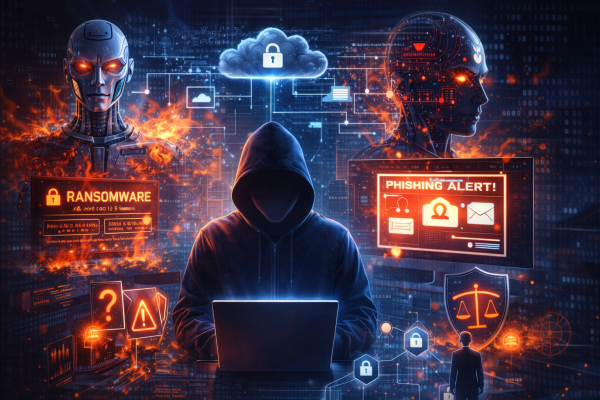
AI-Driven Cyber Attacks Are Becoming the New Normal
Attackers are now using artificial intelligence to automate phishing, identify system weaknesses, and launch attacks at scale. These AI-powered threats can adapt in real time, making traditional signature-based security tools less effective. In 2026, the question isn’t if attackers use AI – it’s how fast defenders can keep up.
Phishing Attacks Are Nearly Impossible to Spot
Phishing emails in 2026 look, sound, and feel real. Attackers use stolen data and behavioural analysis to craft highly personalized messages that bypass user suspicion. Even experienced employees are vulnerable, making human awareness training as important as technical defences.
Ransomware Is Targeting Business Operations, Not Just Data
Modern ransomware attacks don’t just encrypt files – they halt operations. Attackers now focus on disrupting supply chains, customer services, and critical systems to maximize pressure. Downtime has become the real weapon, forcing businesses to choose between paying attackers or losing customer trust.
Cloud Misconfigurations Are the Silent Security Risk
As more businesses migrate to the cloud, misconfigured access controls and permissions are becoming a major attack vector. These aren’t flaws in cloud platforms but gaps in setup and management. A single misconfiguration can expose sensitive data to the internet without triggering alerts.
Third-Party and Supply Chain Attacks Are Increasing
Businesses rely on vendors, software providers, and managed services more than ever. In
2026, attackers often enter through the weakest link in the supply chain rather than attacking directly. A trusted partner’s security failure can quickly become your organization’s crisis.
Insider Threats Are Harder to Detect
Not all threats come from outside. Insider risks – whether intentional or accidental – are rising due to remote work, access sprawl, and credential misuse. Without proper monitoring and access control, trusted users can unknowingly become the entry point for major breaches.
Regulatory Pressure Is Getting Tougher
Data protection laws and cybersecurity regulations continue to evolve worldwide. In 2026, non-compliance doesn’t just mean fines – it can mean reputational damage and loss of business opportunities. Security is no longer a choice. It’s now a compliance requirement.
Zero Trust Is Moving from Concept to Necessity
The traditional perimeter-based security model no longer works in a cloud-first, remote-work world. Zero Trust – where every access request is verified has become essential. Businesses that delay adopting this approach leave gaps attackers are quick to exploit.
Cybersecurity Skills Gaps Are a Major Risk
Technology alone cannot stop cyber threats. A shortage of skilled cybersecurity professionals means many organizations lack the expertise to detect and respond to incidents quickly. This makes managed security services and automation increasingly important.
Final Thoughts
Cybersecurity in 2026 is about resilience, not just prevention. Businesses must assume attacks will happen and focus on early detection, rapid response, and continuous improvement. Ignoring these evolving threats isn’t just risky—it’s costly.
The businesses that succeed will be those that treat cybersecurity as a core business strategy, not a background IT function.